
Every year, in the last days of October, Mexico gets ready. Houses are rearranged to receive guests who will not knock. Graves are cleaned, painted, and filled.
Search for Day of the Dead experiences in Mexico and the same four or five postcards come back. What almost never comes back is an answer to the question travelers are actually carrying: am I welcome here, and how am I supposed to behave once I arrive?
This guide answers both. Four places, what happens in each, and what is expected of a visitor who shows up. Plus one destination, Tequila, Jalisco, that answers a different question altogether: where the craft those dead left behind is still held up, every day of the year.
What traditional Mexican rituals actually are
One thing has to be said before the destinations:
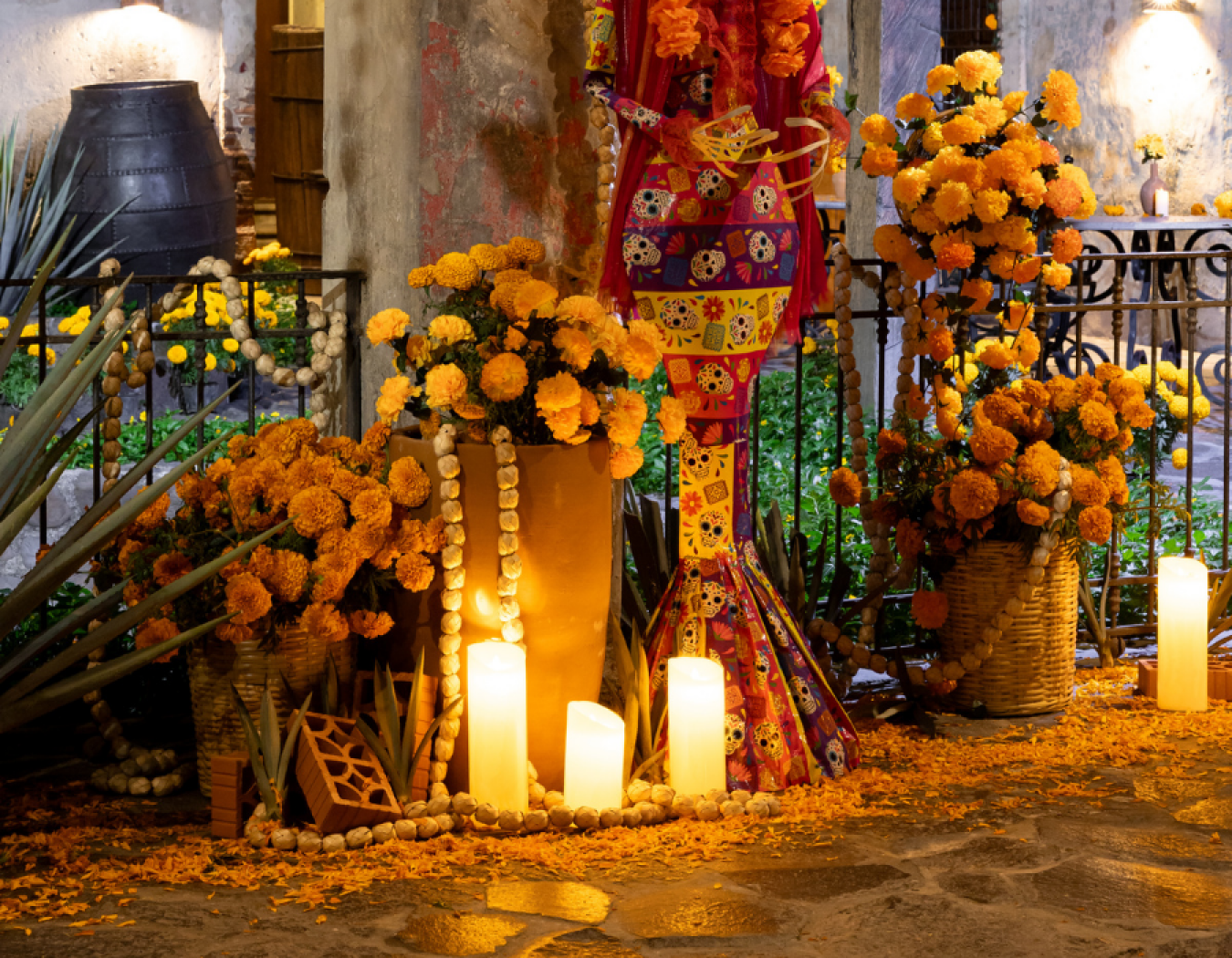
This is not Mexican Halloween. It is not a costume event. The traditional Mexican rituals performed on November 1 and 2 are domestic and funerary. Families cook the food their dead preferred. They build an altar, an ofrenda, and set a place on it. Marigolds, cempasúchil, are used because the scent is said to guide the dead home. None of it is staged, and all of it would happen if no visitor ever came.
That is exactly what makes a visitor’s position delicate. In most of these places you are not attending an event. You are standing in a cemetery near midnight, close to a family grieving one specific person.
Four rules cover nearly every situation:
- Ask before photographing anyone.
- Never photograph a grave with people at it.
- Do not step on an ofrenda.
- And if you are offered food, take it.
Pátzcuaro and Janitzio, Michoacán
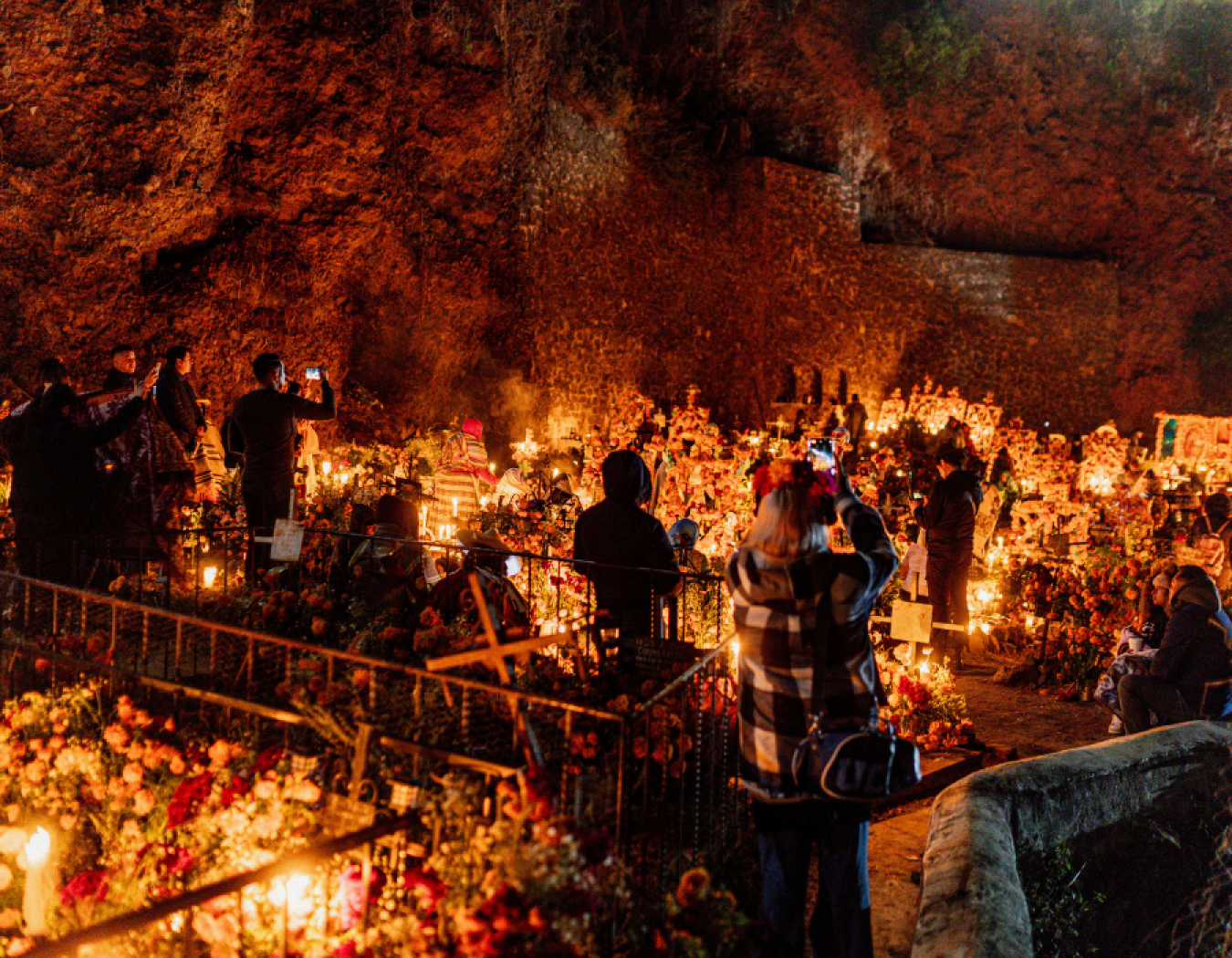
On the shores of Lake Pátzcuaro, the night of November 1 has a Purépecha name: Animecha Kejtzïtakua, the vigil of the souls. It begins near midnight and does not end until the sky turns gray.
The detail that defines it: when a child in the community dies during the year, the godparents build an arch of reed covered in marigolds, hung with bread and fruit, and carry it to the grave. The arch is raised once, at that child’s first Day of the Dead, and never again.
What to expect: cold, quiet, and hours of it. This is a vigil, not a program, and there is nothing to watch in the way visitors usually mean. Janitzio, the island, draws the crowds and the ferry lines. The rite breathes better on the shore, in Tzintzuntzan, Ihuatzio, Arócutin, Cucuchucho.
Getting there: Morelia has the closest airport. Guadalajara is roughly three and a half hours away by road, which matters later.
Tequila, Jalisco
Here the question changes.
Tequila does not appear on lists of Day of the Dead experiences in Mexico, and it does not compete with Janitzio or Oaxaca on that ground. What Tequila holds is the other half of the same subject: not the night the dead are remembered, but the two centuries and more in which a craft passed across generations without a single break.
Oaxaca
Oaxaca does something no other place does. It takes grief into the street and makes it walk. The comparsas of the Central Valleys, among them the muerteada of San Agustín Etla, leave at night and do not come back until well into the next morning, with brass bands, masks, and choreography that has been adjusted across generations.
And yet the most precise gesture here is tiny. Oaxacan pan de muerto carries a cabecita pressed into the crust, a small hand-painted face of dough that represents the specific person the loaf is meant for. Every bread has an addressee.
In the Xoxocotlán cemetery, sand tapestries are laid across the graves until the first rain takes them.
What to expect: noise, movement, and no schedule worth relying on. Oaxaca is the most visitor-tolerant of the four, because the street belongs to everyone. The cemeteries still do not.
Getting there: Oaxaca City has an international airport, and it is a separate flight from everything else on this list.
San Andrés Mixquic
Just over an hour from central Mexico City, Mixquic keeps the domestic rite almost untranslated. On November 1, children walk the streets ringing bells for the souls. It is called la campaneada, and it works as an announcement.
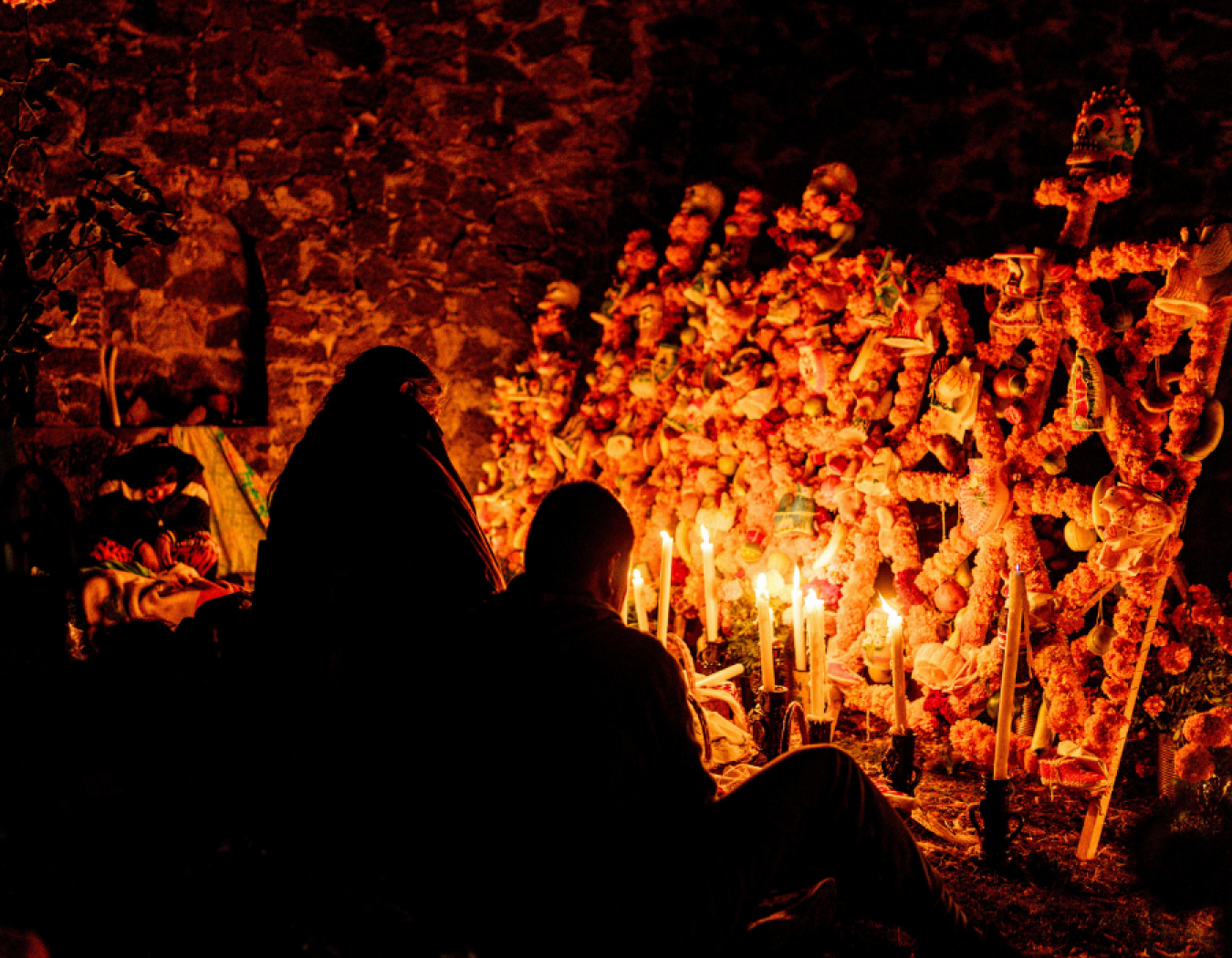
The night of the 2nd brings La Alumbrada. At sundown, families enter the churchyard of San Andrés Apóstol and light candles on every grave, one by one, and then they stay. There is no stage and no program. There are people sitting beside their dead until the wax runs out.
What to expect: the tightest crowds on this list and the least room to stand apart. Mixquic is a small town and November 2 fills it. This is where the photography rule matters most, because every grave has someone at it.
Getting there: Mixquic sits in Tláhuac, technically part of Mexico City. Around ninety minutes from the center on an ordinary day, and considerably longer on the 2nd.
The craft as a form of memory
A jimador learns from his father. The maestro tequilero who decides today whether a harvest is ready learned that from someone who is no longer here. In the agave landscape, a UNESCO World Heritage Site since 2006, every field you see was planted by someone who knew he might not be there to cut it.
If what moves you is a tradition still standing because people hold it up with their hands, there is one here that has been doing it in plain sight for centuries.
Destilería La Rojeña
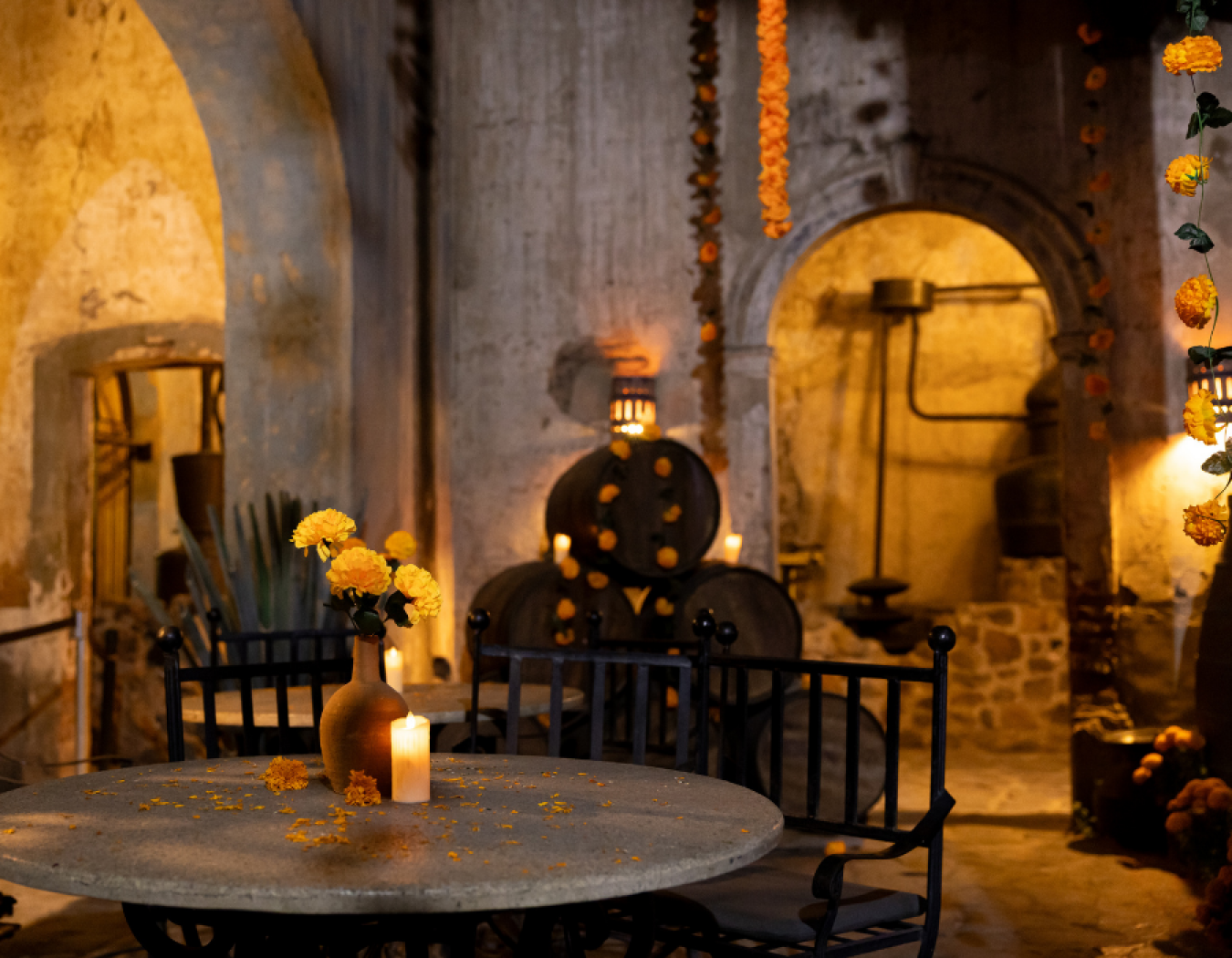
Destilería La Rojeña opened in 1795 and has not stopped working since. It is the oldest tequila distillery in Latin America. Among authentic tequila tours in the country, it is the one with the longest unbroken record: the agave, the ovens, the wood, the same ground under all of it.
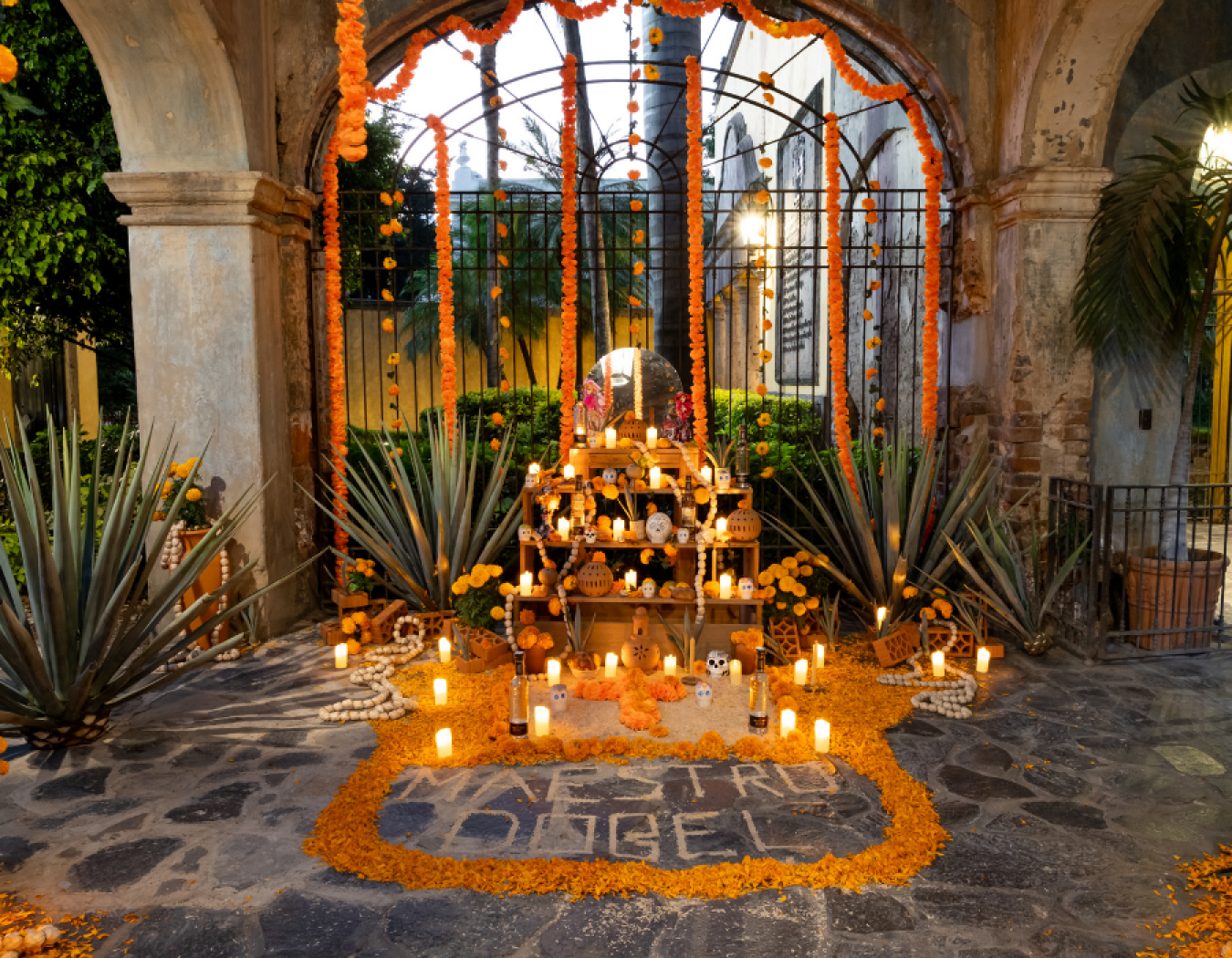
Walk it and you understand why tequila ends up on Mexican ofrendas in the first place. It is set out for the one who returns because it kept company with the one who left. On an altar, the glass is a place set at the table.
The route through the agave
The Jose Cuervo Express runs the rails between Guadalajara and Tequila, crossing the agave fields that started all of this, along the same corridor that carried tequila to the rest of the country for more than a century.
Guadalajara is the international gateway here, and it is also the closest major airport to Pátzcuaro. Those two destinations fit into one trip more easily than the map suggests.
Day of the Dead experiences in Mexico: choosing one
There is no single right answer. Janitzio, Oaxaca, and Mixquic hold the night the dead come back, and no list replaces them. Go, if you can go quietly.
Tequila holds something else: proof that memory is also kept awake on ordinary days, by people who never let a craft fall. The traditional Mexican rituals of November last two nights. This one has been running since 1795, and you can walk into it in any month of the year.