
In the center of Tequila, a small town in the Mexican state of Jalisco, there are stone walls that have stood in the same place for more than two hundred years. Inside are the masonry ovens, the fermentation tanks and a name written across the stone: La Rojeña.
La Rojeña history began long before tequila had a denomination of origin or a place on bar shelves around the world. It began with a family, a permit signed by a king, and a craft passed down from generation to generation.
Where the tequila tradition comes from
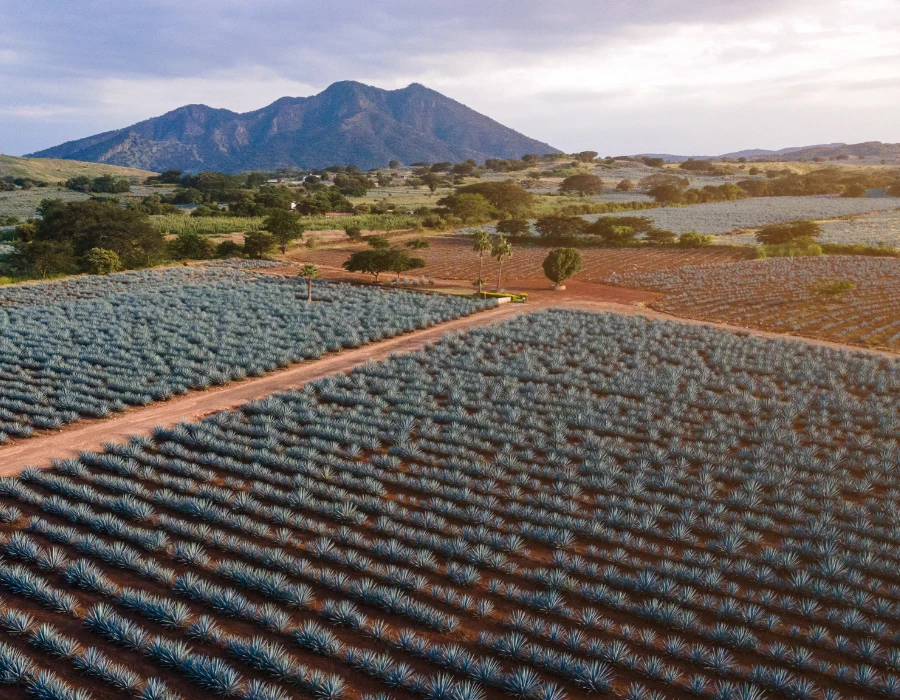
Tequila is both a drink and a place. The town sits about an hour northwest of Guadalajara, at the foot of a volcano, surrounded by the blue agave fields that UNESCO named a World Heritage Site in 2006.
The land here is volcanic, high and dry. Blue agave found the conditions it needed, and the region built its economy, its landscape and its daily life around the plant.
Indigenous peoples worked with agave long before the Spanish arrived, cooking its hearts and fermenting them for ritual and everyday use. Distillation reached the region in the sixteenth century and changed what was possible. From cooked and fermented agave came mezcal wine, the direct ancestor of tequila.
The drink eventually took the name of the town where it was made. Since 1974, that name has been legally protected: tequila can only be produced in designated areas of Mexico, with Jalisco at the center. This was the first Mexican product to receive a denomination of origin.
Three dates that explain La Rojeña history
There is no single founding day. There are three moments that connect, and together they tell how the distillery came to be.
1758: the land
José Antonio de Cuervo acquired land in Tequila where a taberna was already operating, the word used at the time for the rustic distilleries of the region. That was where the family line began.
1795: the royal license
Spain had banned the production of local spirits during the eighteenth century. Once the ban was lifted, King Carlos IV granted José María Guadalupe de Cuervo y Montaño the first license to produce and sell mezcal wine.
That document marks the formal beginning of the oldest tequila company on the continent. It also changed the scale of the craft: what had been made for the region could now be sold legally beyond it.
1812: the name
María Magdalena de Cuervo inherited the family properties and married Vicente Albino Rojas. He built the distillery that still operates in the heart of the town, and gave it the name it has carried ever since.
La Rojeña takes its name from his. Two centuries later, the name is still on the façade and production still happens behind it.
The nineteenth century carried that name abroad. Around 1852, the first barrels left for California from the port of San Blas. Decades later, Jose Cuervo became the first brand to bottle tequila individually, a change that made it far easier to transport.
The craft behind the tequila tradition
Much of what happens inside the distillery is still done the way it was done in the nineteenth century.
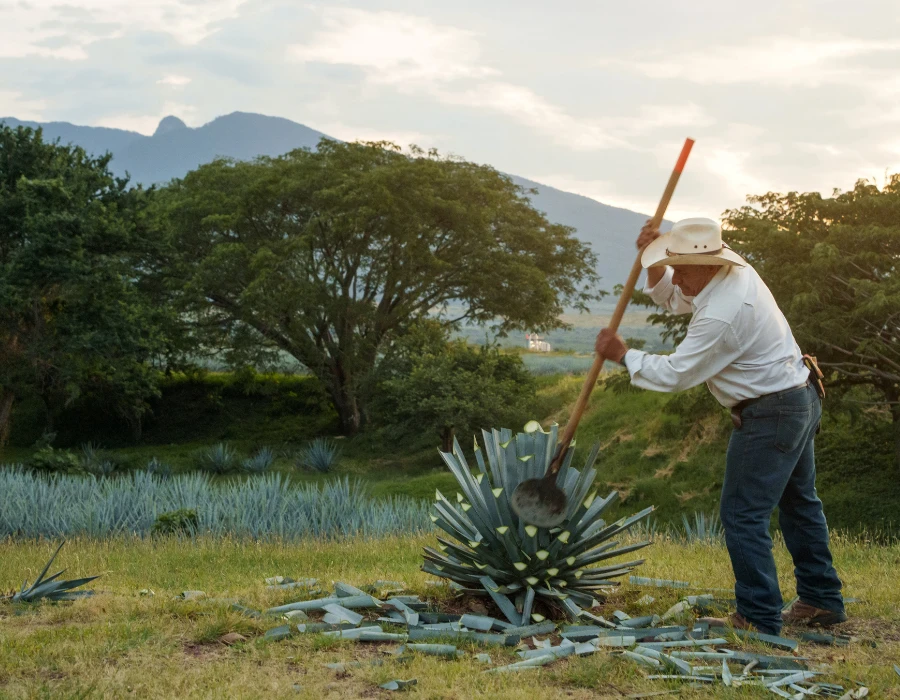
It starts with the jimador, the field worker whose job is to know exactly when a plant is ready. Using a coa, a long-handled tool with a circular blade that has barely changed in two hundred years, he strips the leaves until only the piña remains, the dense heart of the agave.
Those agave plants go into the ovens, where slow cooking turns the plant sugars into something new. Milling, fermentation and the copper stills follow.
Then comes the waiting. Part of what is produced rests in barrels inside the same stone cellars, where thick walls hold the temperature steady on their own.
None of this survives by itself. The tequila tradition depends on families of jimadores, master distillers and workers who learned by watching the people who came before them. That knowledge is not written down anywhere.
Visiting the distillery today
What makes this story unusual is that it has not ended. Destilería La Rojeña is a working distillery, not a museum or a reconstruction. Visitors walk through the same courtyards, ovens and cellars that have kept production going for more than two centuries.
The tour follows the full process, from the agave heart to the barrel, guided by the people who work there every day.
Getting there is part of the story. The Jose Cuervo Express travels the same route between Guadalajara and Tequila that connected the agave fields to the rest of the country for generations. The line crosses the agave landscape, and the ride becomes the opening chapter of the visit.
Tequila itself is a Pueblo Mágico, a designation the Mexican government gives to towns with particular cultural weight. While many international visitors discover Tequila on a first trip from Guadalajara, its culture, heritage, and distilleries inspire them to stay longer.
La Rojeña history reads differently when you walk through it slowly, in the place where it happened.